


 glioblastoma multiforme, a type of mind tumor, is one of the maximum hard-to-deal with cancers. best a handful of medication are authorized to deal with glioblastoma, and the median life expectancy for patients recognized with the ailment is much less than 15 months.
mit researchers have now devised a brand new drug-handing over nanoparticle that might provide a higher manner to deal with glioblastoma. the particles, which carry one-of-a-kind tablets, are designed with a view to without difficulty move the blood-brain barrier and bind immediately to tumor cells. one drug damages tumor cells’ dna, while the opposite interferes with the structures cells typically use to repair such damage.
in a have a look at of mice, the researchers showed that the particles should decrease tumors and prevent them from developing returned.
“what's specific here is we aren't most effective able to use this mechanism to get across the blood-brain barrier and goal tumors very correctly, we're the use of it to supply this unique drug aggregate,” says paula hammond, a david h. koch professor in engineering, the pinnacle of mit’s branch of chemical engineering, and a member of mit’s koch institute for integrative cancer studies.
hammond and scott floyd, a former koch institute clinical investigator who's now an associate professor of radiation oncology at duke college school of medication, are the senior authors of the paper, which appears in nature communications. the paper’s lead writer is fred lam, a koch institute research scientist.
concentrated on the brain
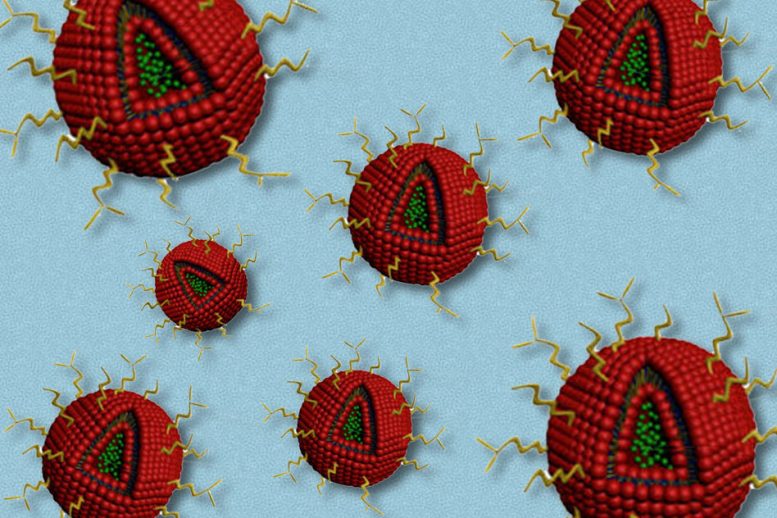
the nanoparticles used in this take a look at are primarily based on particles at the beginning designed by way of hammond and previous mit graduate pupil stephen morton, who is additionally an author of the new paper. these spherical droplets, known as liposomes, can carry one drug in their center and the opposite of their fatty outer shell.
to conform the particles to treat brain tumors, the researchers had to give you a way to get them across the blood-brain barrier, which separates the brain from circulating blood and stops big molecules from getting into the brain.
the researchers determined that if they covered the liposomes with a protein referred to as transferrin, the particles could bypass through the blood-brain barrier with little trouble. moreover, transferrin also binds to proteins discovered on the surface of tumor cells, allowing the particles to build up at once at the tumor website even as averting wholesome brain cells.
this targeted method allows for delivery of huge doses of chemotherapy pills that may have unwanted side consequences if injected for the duration of the frame. temozolomide, that's commonly the primary chemotherapy drug given to glioblastoma sufferers, can cause bruising, nausea, and weak point, among other facet effects.
building on prior paintings from floyd and yaffe on the dna-damage response of tumors, the researchers packaged temozolomide into the internal core of the liposomes, and within the outer shell they embedded an experimental drug known as a bromodomain inhibitor. bromodomain inhibitors are believed to intervene with cells’ potential to repair dna damage. through combining these pills, the researchers created a one- punch that first disrupts tumor cells’ dna repair mechanisms, then launches an attack on the cells’ dna even as their defenses are down.
the researchers examined the nanoparticles in mice with glioblastoma tumors and showed that once the nanoparticles reach the tumor website online, the debris’ outer layer degrades, liberating the bromodomain inhibitor jq-1. approximately 24 hours later, temozolomide is released from the particle center.
the researchers’ experiments discovered that drug-delivering nanoparticles lined with transferrin had been far more powerful at shrinking tumors than both uncoated nanoparticles or temozolomide and jq-1 injected into the bloodstream on their very own. the mice handled with the transferrin-covered nanoparticles survived for two times as long as mice that received other treatments.
“that is but some other example wherein the aggregate of nanoparticle transport with tablets concerning the dna-harm response can be used correctly to deal with cancer,” says michael yaffe, a david h. koch professor of technological know-how and member of the koch institute, who is additionally an author of the paper.
novel therapies
within the mouse studies, the researchers found that animals handled with the centered nanoparticles skilled lots much less damage to blood cells and other tissues typically harmed via temozolomide. the debris are also lined with a polymer called polyethylene glycol (peg), which enables guard the debris from being detected and broken down by way of the immune system. peg and all of the other additives of the liposomes are already fda-permitted for use in humans.
“our goal turned into to have some thing that could be without problems translatable, with the aid of the usage of easy, already accredited synthetic components in the liposome,” lam says. “this was without a doubt a proof-of-idea examine [showing] that we are able to deliver novel aggregate treatment plans the use of a targeted nanoparticle machine throughout the blood-brain barrier.”
jq-1, the bromodomain inhibitor used in this take a look at, might possibly now not be well-appropriate for human use because its 1/2-existence is too quick, however different bromodomain inhibitors are actually in scientific trials.
the researchers count on that this sort of nanoparticle transport can also be used with other cancer pills, together with many who have by no means been tried in opposition to glioblastoma due to the fact they couldn’t get throughout the blood-mind barrier.
“because there’s such a quick list of medicine that we are able to use in mind tumors, a vehicle that might permit us to use some of the more not unusual chemotherapy regimens in mind tumors could be a actual game-changer,” floyd says. “perhaps we should locate efficacy for more preferred chemotherapies if we will just get them to the proper location by means of working around the blood-brain barrier with a tool like this.”
the research turned into funded by means of the koch institute frontier research application; a ki quinquennial cancer research fellowship; the bridge challenge, a partnership among the koch institute and the dana-farber/harvard cancer center; and the koch institute assist (center) supply from the country wide most cancers institute.
0 comments:
Post a Comment