


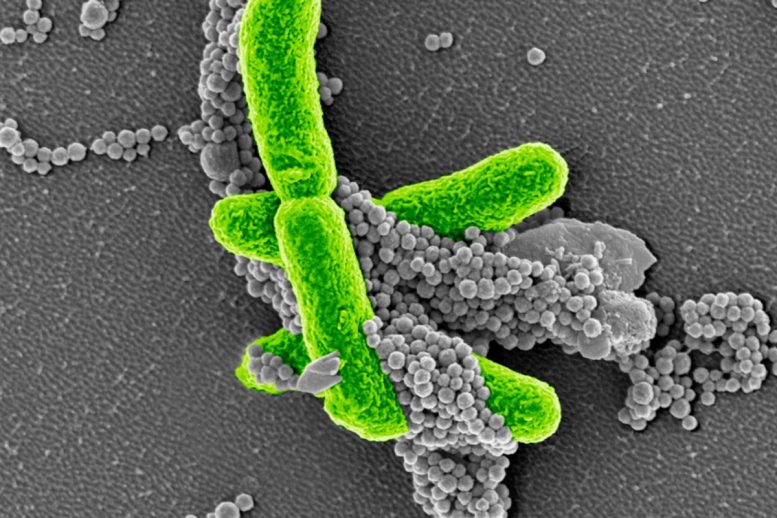
sepsis, or blood poisoning, takes place while the frame’s reaction to infection damages its personal tissues and organs, leading to organ failure. it kills hundreds of thousands each yr worldwide, and is the most common cause of demise in humans who have been hospitalized. regardless of its occurrence, the standard treatment is to give patients antibiotics and fluids, and no new remedies have been developed inside the final 30 years because of the high failure price of sepsis treatments in scientific trials.
the animals usually used to test drug candidates in preclinical trials (mice and baboons) are terrible proxies for human responses to sepsis, as they may be frequently proof against the pathogens that cause sepsis-inducing infections. pigs are a much better model organism, as their immune systems and people’ percentage eighty percent of the equal machinery, their blood clotting is comparable, and their massive length allows their vitals to be monitored in real time. but, even in pig studies, the animals’ responses to sepsis are not presently measured with the identical criteria utilized in human medical exercise, in large part because studies centers lack the employees, gadget, and clinical centers had to carry out the required assessments on a couple of animals.
to cope with this trouble, a team of scientists from the wyss institute at harvard university and boston kids’s sanatorium has created a new approach for medical tracking designed to measure sepsis responses in pigs. reading pigs based on multiple physiological symptoms as well as organ failure, in preference to loss of life, could help provide a extra correct preview of a sepsis drug’s effect on people earlier than it reaches clinical trials. the research is reported in advances in critical care remedy.
human cases of sepsis are evaluated based on a 2016 protocol called that uses sequential organ failure evaluation (sofa) scoring standards to classify the severity of sepsis through incorporating measurements of heart, kidney, liver, lung, brain, and blood clotting feature, as sepsis results in the failure of a couple of organs. commonly, animal fashions are evaluated by way of whether the animal dies due to illness, with the precise cause only being determined at autopsy. stimulated by using the sepsis-3 assessments used clinically, the researchers created a swine-precise sepsis-three (ss-sepsis-3) protocol with swine-precise couch (ss-sofa) scoring standards in order that they could evaluate sepsis in residing infected pigs in a manner that mirrored human clinical assessment.
“our system is going past truely measuring the effects of pathogen injection on inflammation and animal survival. as it mimics the lifestyles-threatening organ failure this is also seen in sepsis sufferers, it additionally may provide a better prediction of how sepsis treatment plans will perform in humans,” said mike tremendous, lead senior staff scientist at the wyss institute and co-writer of the paper.
anna waterhouse, a former studies scientist at the wyss institute, collaborated at the observe with a surgical team led by way of boston kids’s health facility’s senior veterinarian, arthur nedder. they infused e. coli bacteria into the blood of 18 younger yorkshire pigs and used the new protocols to assess the responses of their diverse organs in real time. six pigs have been given the micro organism even as aware, six while below anesthesia, and 6 did now not receive e. coli however underwent the equal tactics (four conscious and two anesthetized). the scientists discovered that will increase in the general ss-couch rankings amongst both aware and anesthetized pigs have been in large part due to kidney and blood clotting failure, with of the conscious animals growing acute kidney failure.
three of the anesthetized animals have been categorized as experiencing septic shock (the very best severity degree within the ss-couch device), based on a mixture of these organ failures in addition to anesthesia-brought on coronary heart failure and the dearth of a fever because of lowered frame temperature. those consequences advise that the results of anesthesia want to be taken into consideration when evaluating responses to sepsis.
actual-time tracking of animals, whether or not alive or anesthetized, calls for a giant investment of employees and time, but being able to more closely mirror and look at human sepsis responses may want to have substantial advantages for drug improvement and checking out.
“our changed pig-specific couch scoring technique based at the sepsis-three pointers lays the inspiration for destiny studies that may quantify the severity of sepsis when evaluated with longer time frames, one of a kind pathogen strains, and antibiotic treatments, in addition to comorbidities that usually accompany sepsis in human patients,” stated corresponding creator and wyss founding director donald ingber, who is additionally the judah folkman professor of vascular biology at harvard clinical faculty and the vascular biology application at boston kids’s clinic, in addition to professor of bioengineering at the harvard john a. paulson school of engineering and implemented sciences (seas).
0 comments:
Post a Comment